
Why Everyone's Suddenly Talking About VPNs
For years, a VPN was the thing your IT team made you switch on before you could open the work drive. Now VPNs come up in parliament debates and federal court rulings.
What changed? Age checks.
The UK: a surge, then a decision
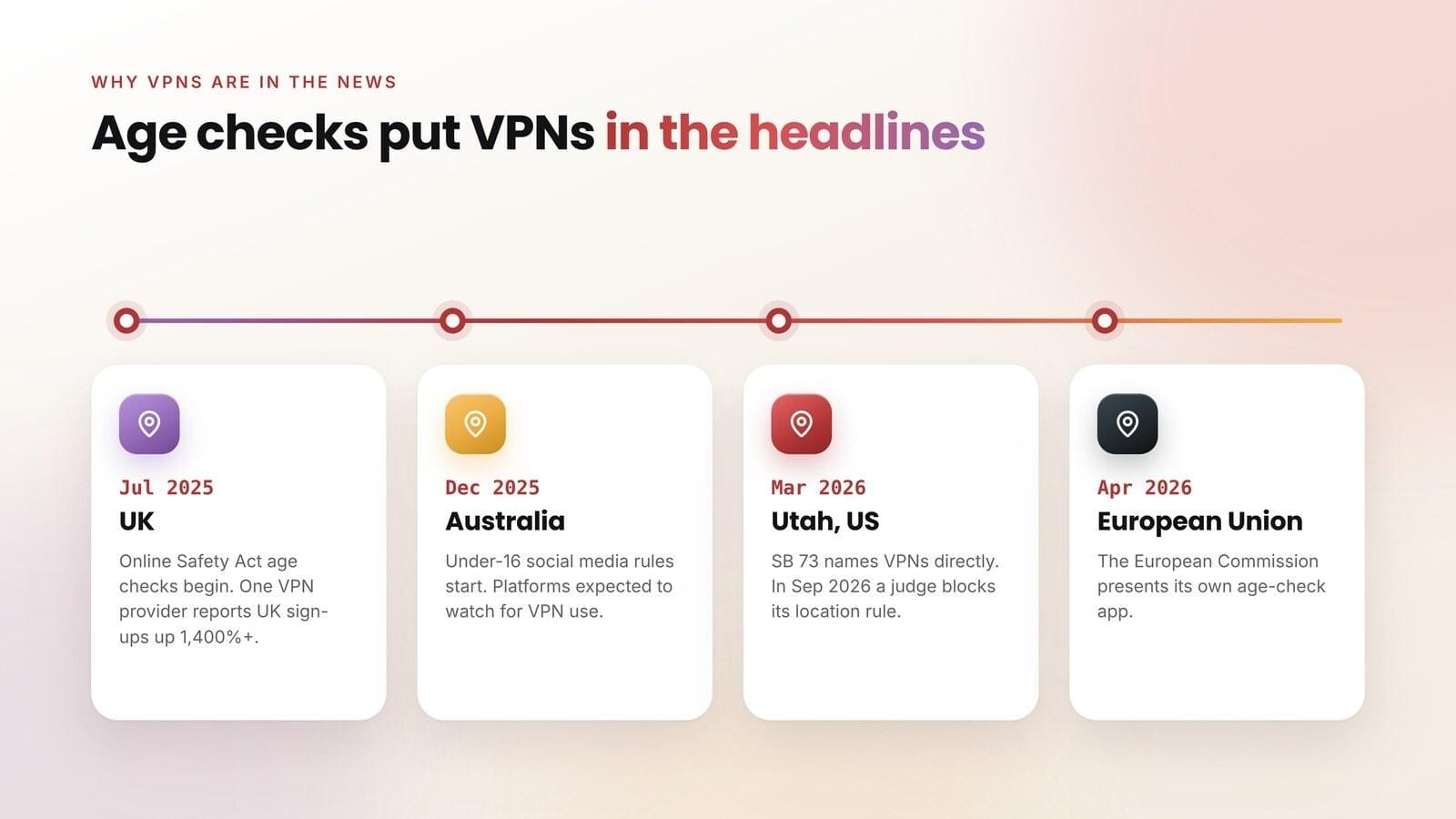
When the UK's Online Safety Act age checks kicked in in July 2025, one VPN provider reported UK sign-ups jumping more than 1,400%.
This year, the government confirmed plans to stop social platforms serving under-16s, with rules expected in 2027. It also gave a clear answer on VPNs: "We will not ban or age-gate VPNs."
The numbers behind that decision are worth a look. Around 26% of 11 to 17-year-olds use a VPN, but only 7 to 10% say they use one to get past age checks. Most use them for something else.
The US: Utah goes first
In March 2026, Utah passed SB 73, a law that names VPNs directly. It says certain adult websites must treat someone physically in Utah as a Utah user, VPN or not. It also bans those sites from explaining how to use a VPN to get in.
It didn't get far. In September, a federal judge blocked the location rule, saying it was "likely to violate the United States Constitution." The case is still going.
Australia and the EU
Australia's under-16 social media rules started in December 2025. The country's eSafety regulator says platforms are "expected to try to stop under-16s from using VPNs to pretend to be outside Australia." No VPN ban, but platforms are expected to watch for it.
In the EU, the European Commission presented its own age-check app in April. The open question everywhere is the same: if checks exist in one place and not the next, what stops people routing around them?
So what does this mean for you?
Probably less than the headlines suggest.
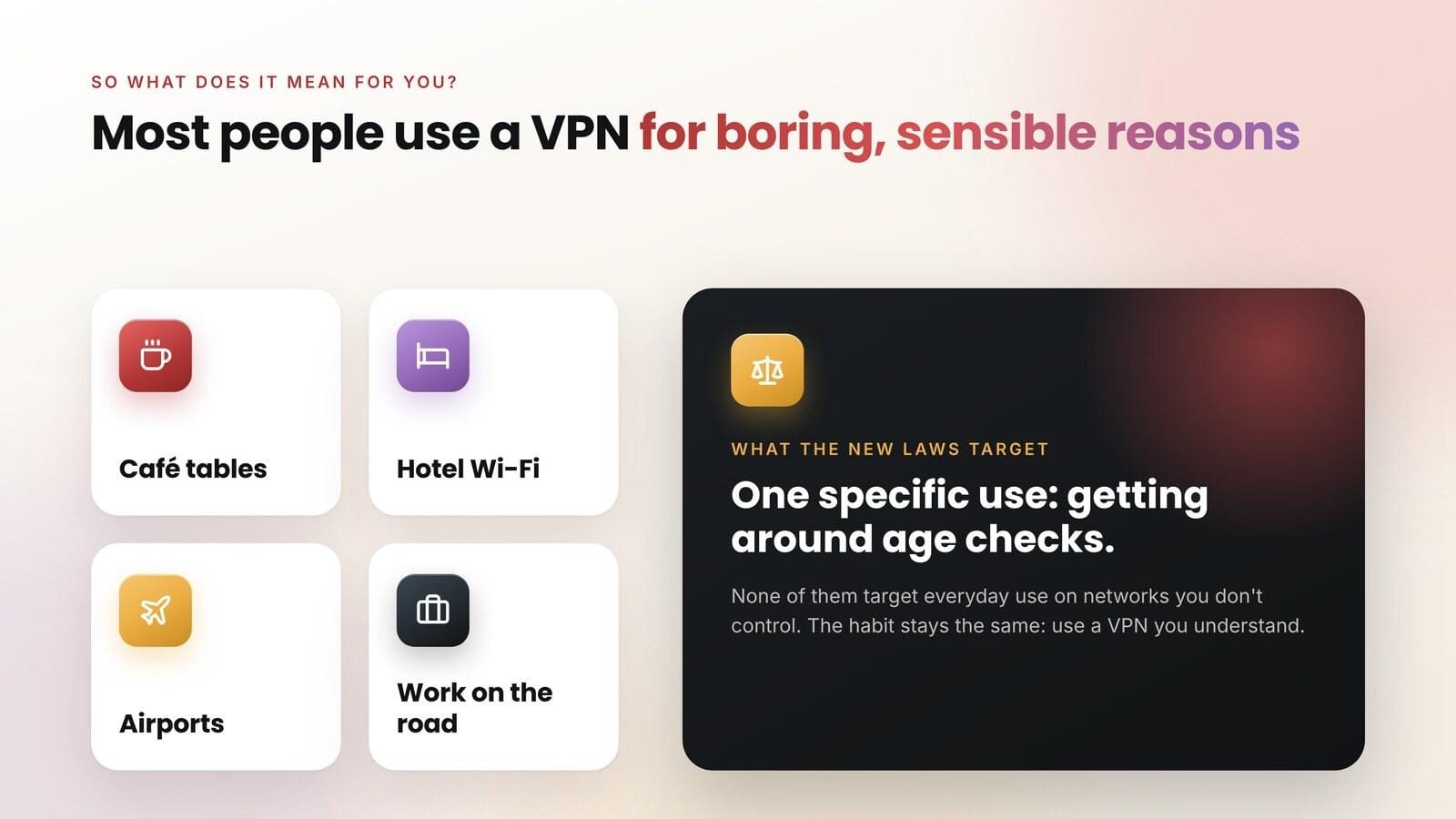
Most people use a VPN for boring, sensible reasons: hotel Wi-Fi, a café table, a work laptop on the road. None of these laws target that. The fight is about one specific use, getting around age checks.
What you might notice is more friction. More sites asking where you are. More questions about traffic that comes through a VPN. And more debate, because governments are still working out where the line sits.
The useful habit doesn't change. Use a VPN on networks you don't control, and choose one you understand.
Santa Browser now has a VPN built in
Our latest update adds a built-in VPN to Santa Browser, made for that everyday reason: it helps keep your connection private on public Wi-Fi. No extra app to install.
The same update brings Santa AI, so you can chat, summarize a page or get shopping help without leaving the tab.
Santa Browser is free, private and secure, and it gives a little back.